- The University of Vigo presented research relating to the analysis of the effects of climate change on certain socio-economic activities in the region. These include studies on the influence of meteorological variables on potato yields in A Limia.
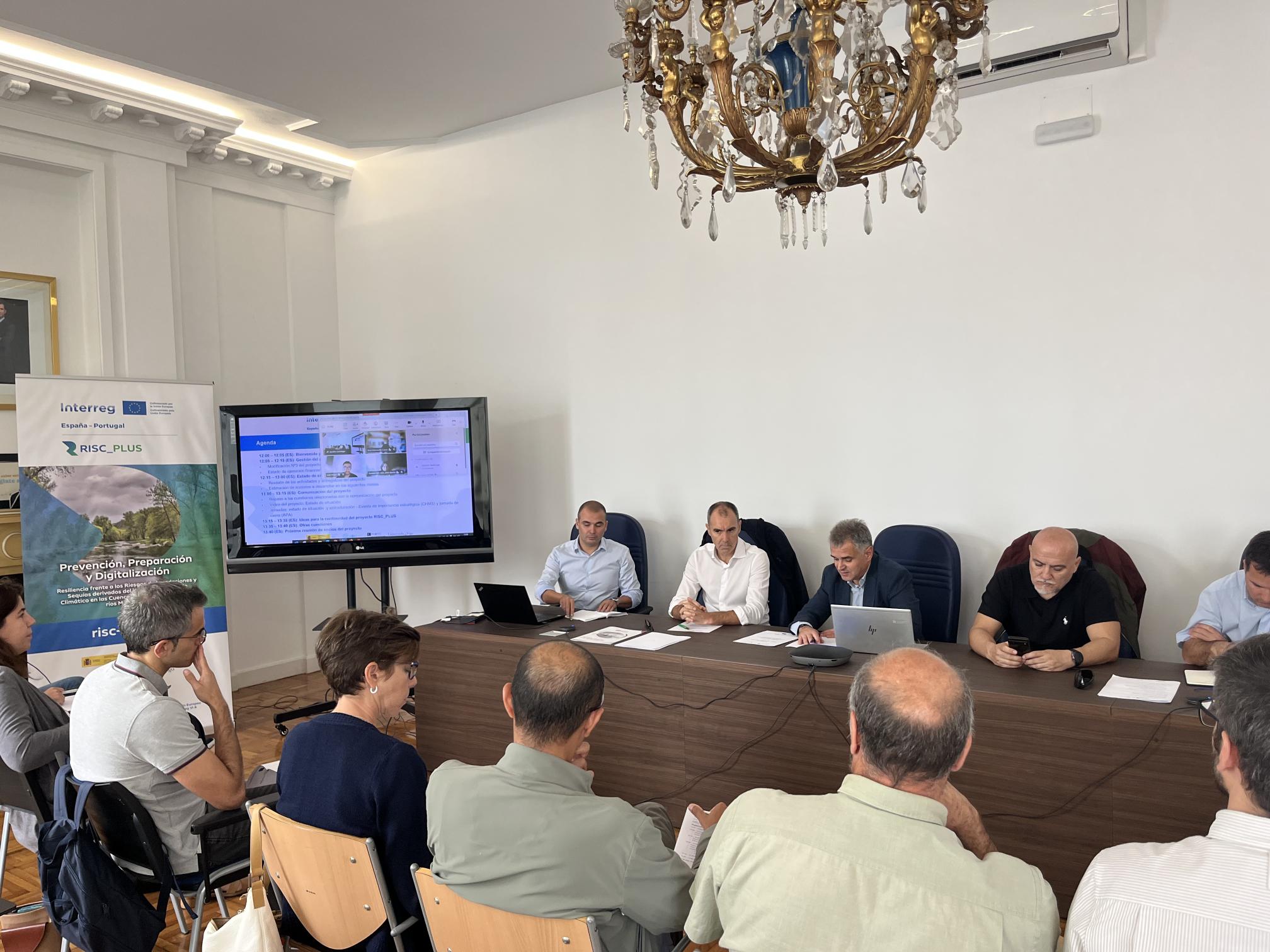
- The partners in the European RISC_PLUS project held the 27th meeting of the Joint Working Group in Ourense, with the aim of reviewing the progress of the planned activities and coordinating the actions to be carried out over the coming months.
The meeting was attended by representatives of the Miño-Sil River Basin Authority (CHMS), the Portuguese Environment Agency (APA), the University of Vigo (UVIGO) and the Faculty of Engineering at the University of Porto (FEUP), organisations that form part of the project partnership.
With regard to hydrological monitoring activities, the Miño-Sil River Basin Authority reported on the progress of the monitoring stations planned for the Spanish part of the river basin district, where work has been completed on 10 of the 11 stations included in the project.
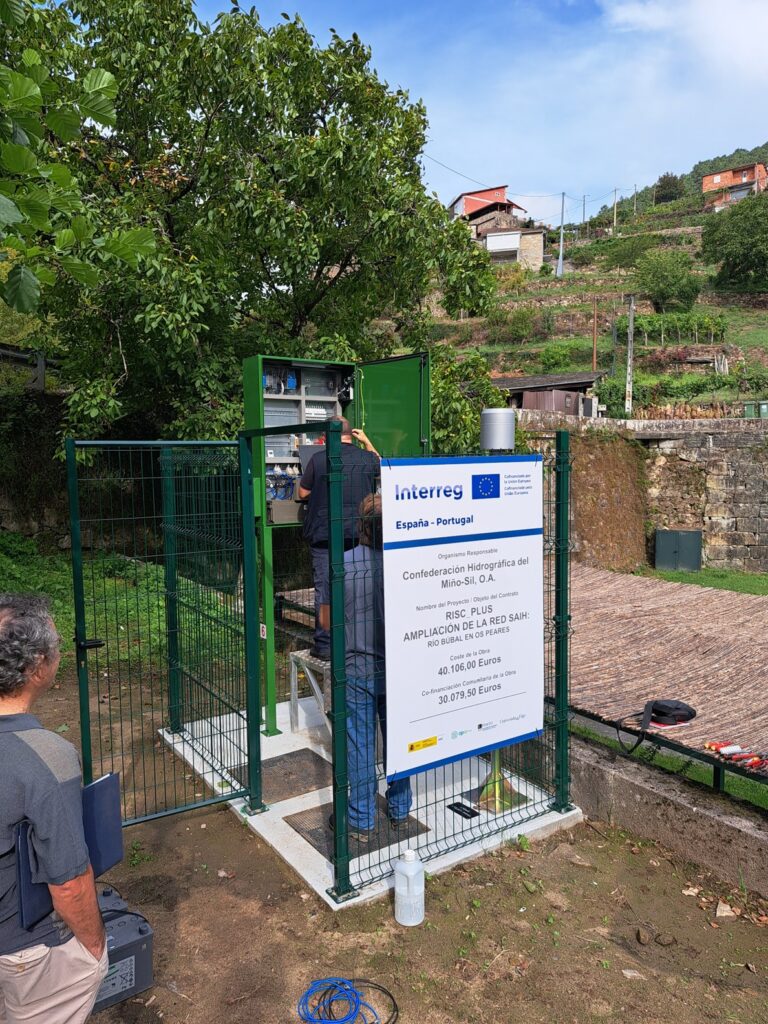
Among the issues discussed was the completion of works on the new Os Peares station of the Automatic Hydrological Information System (SAIH), located on the River Búbal in the province of Ourense. Furthermore, the status of the Automatic Water Quality Information System (SAICA) station planned for the River Arnoia in Allariz was reviewed.
For its part, the Portuguese Environment Agency presented a report on the status of the seven monitoring stations installed in Portugal, comprising two hydrometric stations and five meteorological monitoring stations, which were commissioned in 2025.
The meeting also provided an opportunity to review work relating to drought analysis. In this regard, the Faculty of Engineering at the University of Porto presented studies on the development of indicators to assess drought risk and analyse its possible evolution under different climate scenarios.
With regard to flooding, the partners discussed the progress of work on hydrological modelling and the development of forecasting and warning systems, as well as the technical coordination required to integrate the results of the various studies.
Furthermore, the University of Vigo presented work relating to the analysis of the effects of climate change on specific socio-economic activities in the region. These include studies on the influence of meteorological variables on potato yields in A Limia and on vineyards in the Ribeiro and Ribeira Sacra designations of origin.
This project, co-funded by the European Interreg Spain–Portugal (POCTEP) programme 2021–2027, is committed to solutions based on scientific knowledge, cross-border cooperation and technological innovation, to ensure efficient and sustainable water management in a context marked by climate change.