- The conference held in Tui focuses on the main challenges facing the new River Basin Management Plan within the framework of the Albufeira Convention
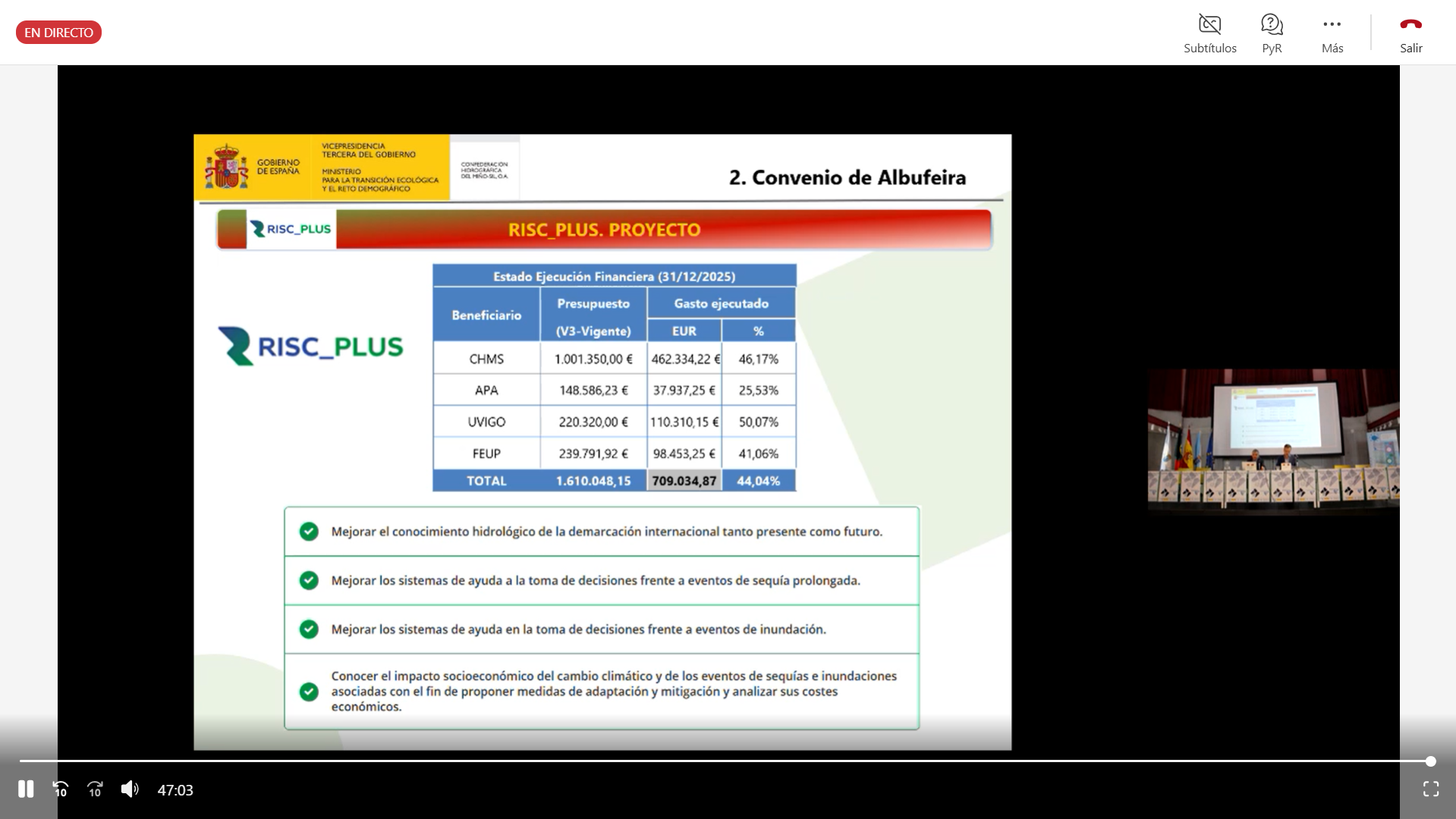
- Projects such as RISC_PLUS strengthen monitoring, risk prevention and joint water management within the river basin district
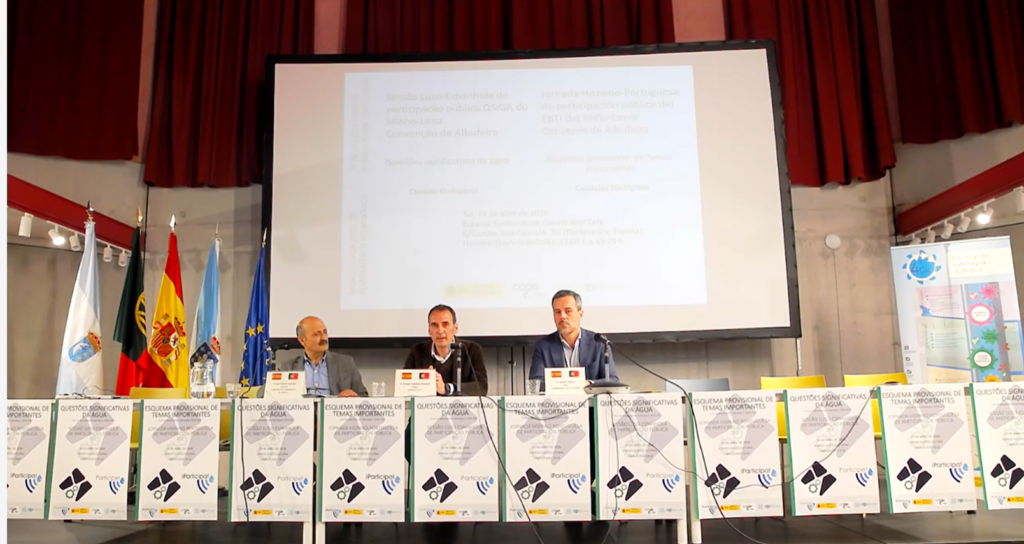
Spain and Portugal are making progress in identifying the main challenges regarding water management in the Miño basin under the Albufeira Convention, following a public consultation event held in the Pontevedra municipality of Tui.
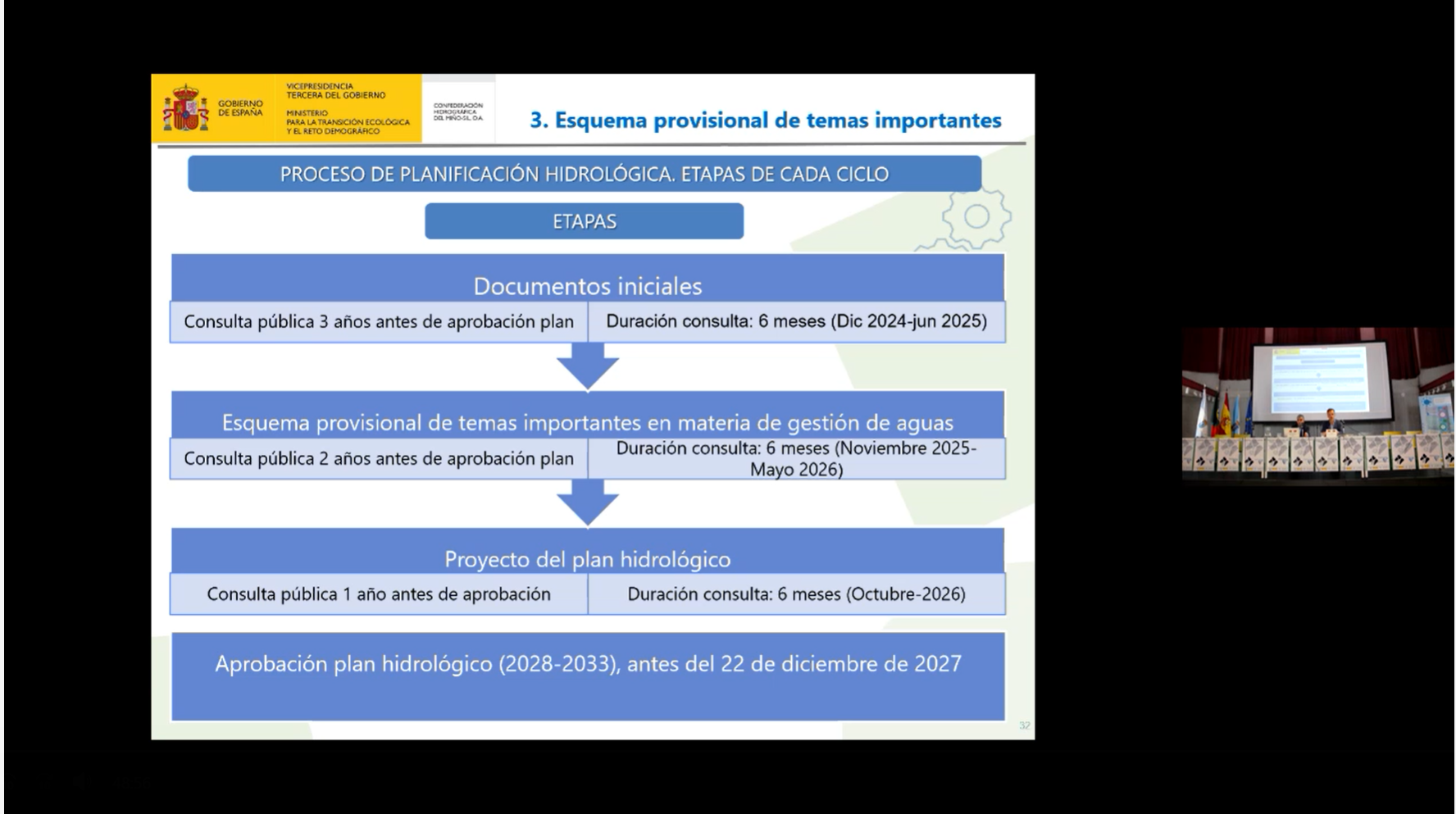
The meeting, organised by the Ministry for Ecological Transition and the Demographic Challenge (MITECO), through the Miño-Sil River Basin Authority (CHMS), and the Portuguese Environment Agency (APA), provided an opportunity to discuss the contents of the Provisional Outline of Important Issues (EpTI), a key document in the hydrological planning process.
A key step in water resources planning
The EpTI represents the second milestone in the development of the river basin management plans and sets out the main issues relating to water management, as well as possible solutions.
In the Spanish part of the river basin district, 16 key issues have been identified, grouped into four categories: meeting environmental objectives, meeting demand, resilience to extreme events, and improving knowledge and governance.
The main challenges include the effects of climate change, pressure on water resources, water quality issues, and the need to improve management of floods and droughts.
Cooperation as a key pillar
The conference highlighted the importance of cross-border cooperation in a shared river basin, where water management requires coordination between public authorities, local stakeholders and the scientific community.
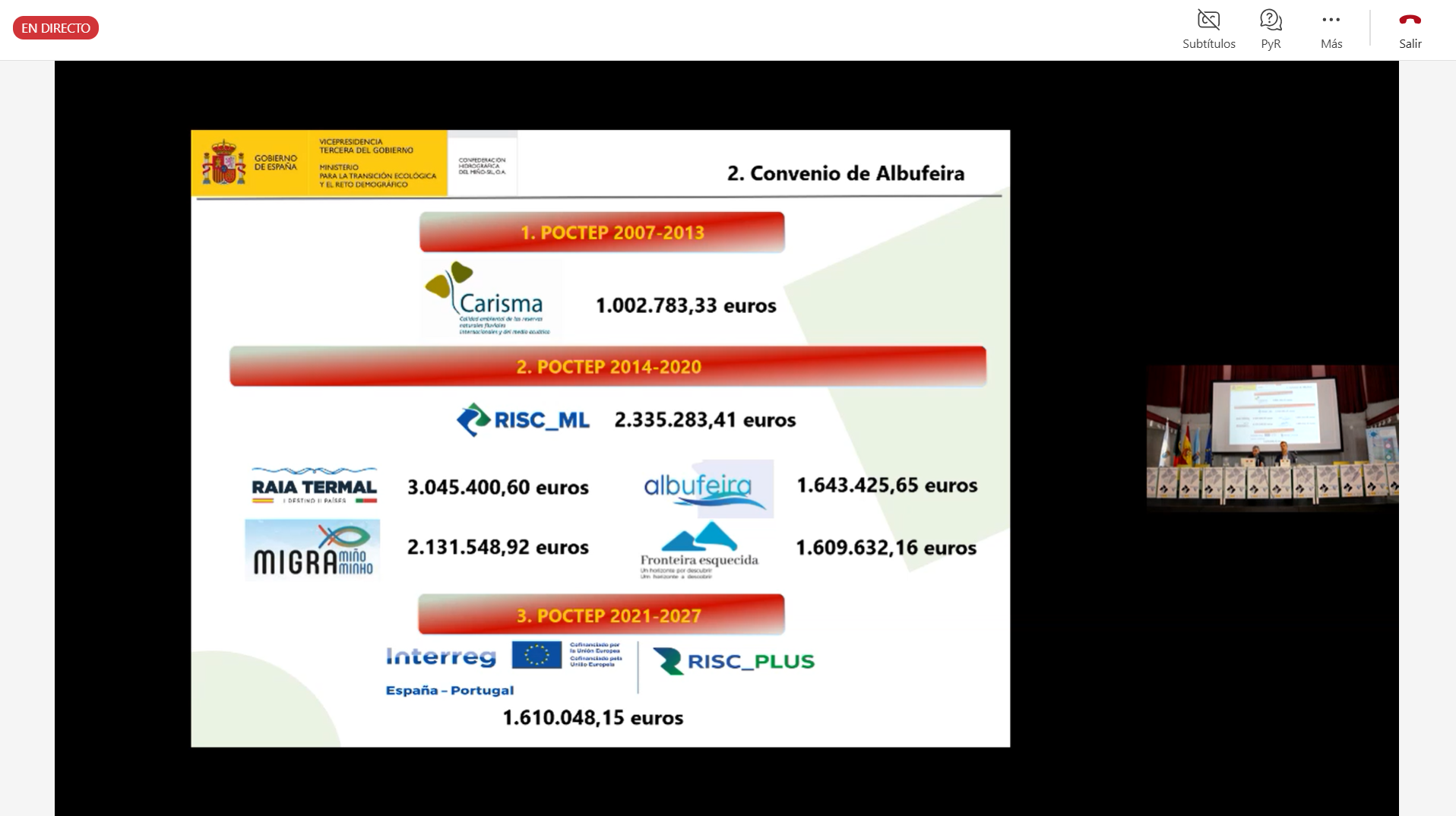
In this context, cooperation initiatives such as the European POCTEP RISC_PLUS project contribute directly to advancing these objectives, by strengthening hydrometeorological monitoring, improving understanding of river behaviour and developing tools for the prevention of risks associated with extreme events.
Knowledge, data and coordination
The RISC_PLUS project’s approach, based on collaboration between public authorities and research centres in Spain and Portugal, enables the generation of key information to improve the management of water bodies, in terms of both quality and quantity.
Furthermore, the development of monitoring and analysis systems contributes to better preparedness for floods and droughts, in line with the objectives set out in the hydrological planning process.
The conference held in Tui reinforces the need to continue advancing towards water management based on knowledge, cooperation and public participation.
In a context marked by climate change, coordination between countries and the development of joint projects are essential to ensure the protection of water resources and the resilience of the territory.