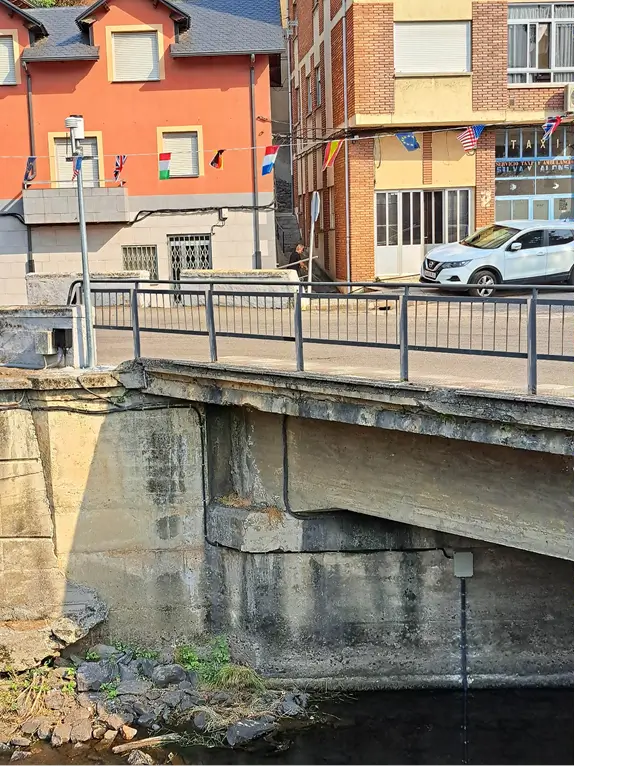
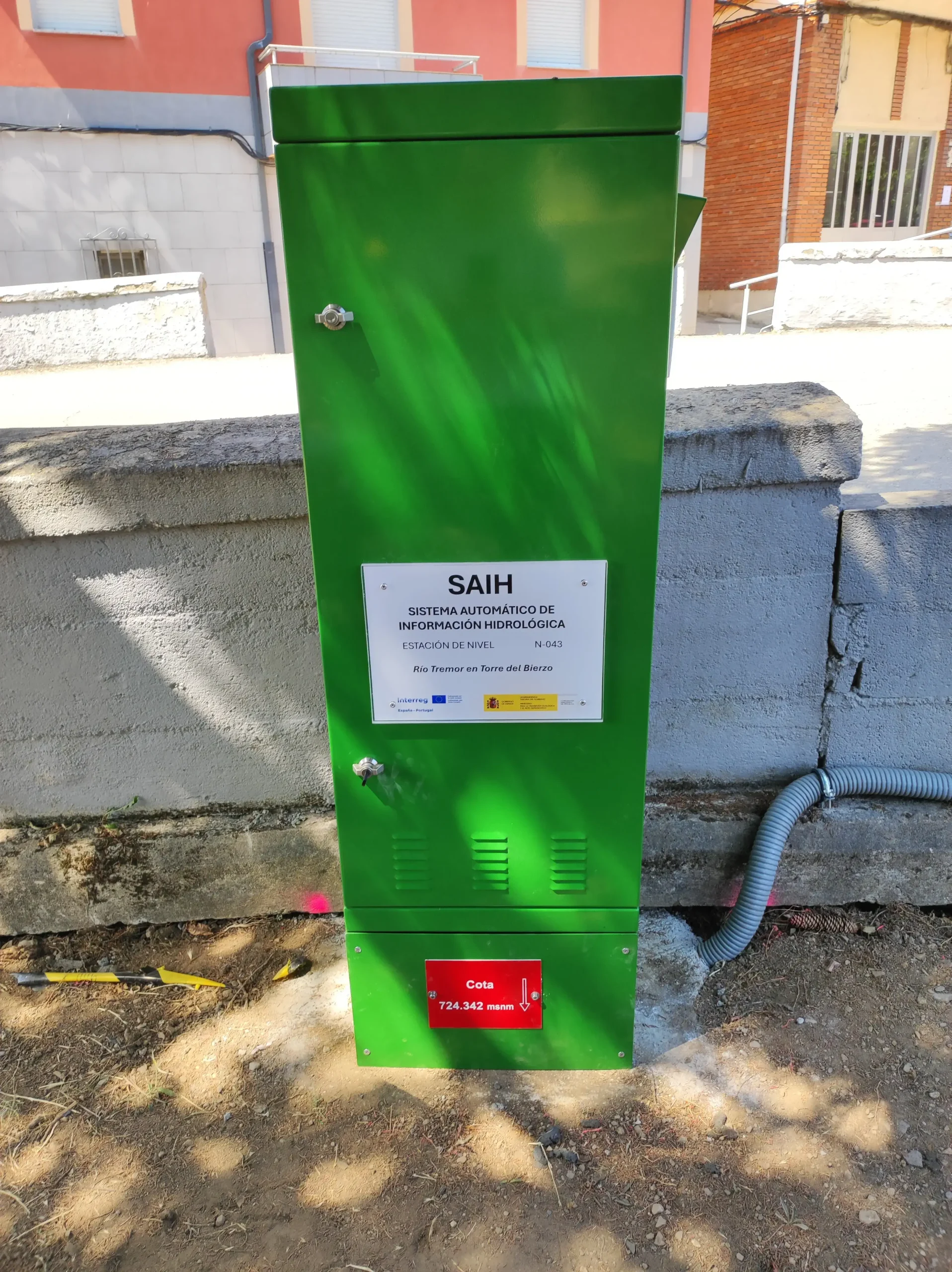
- The new station on the Tremor River strengthens real-time hydrological monitoring in Torre del Bierzo
The Miño-Sil Hydrographic Confederation O.A. (CHMS) is expanding its hydrographic control network with the installation of a new Automatic Hydrological Information System (SAIH) station on the Tremor River, at the municipality of Torre del Bierzo. The action is part of the European RISC_PLUS project, aimed at improving prevention and response to extreme hydrological events.
During the summer months, the necessary work was carried out to enable this new control point, which incorporates state-of-the-art instrumentation to measure river level, rainfall, and ambient temperature. This data is recorded continuously and sent every five minutes to the CHMS Basin Control Center (CECU) in Ourense, allowing up-to-date and accurate information to be available for possible flood episodes or water scarcity.
With an approximate investment of 41,300 euros, this action allows the expansion and strengthening of the district’s hydrological control network, modernizing the monitoring capacity of hydrometeorological conditions in one of the tributaries of the Sil River.
The installation of these advanced measurement systems allows for significant improvement in knowledge of the state of water resources and the response of watercourses to episodes of intense rainfall, floods, or prolonged periods of drought.
Access to accurate, real-time data through the SAIH Network enables competent authorities to anticipate the effects of extreme episodes through prevention, preparation, and protection actions, thus contributing to public safety and environmental conservation.
With this new infrastructure, CHMS continues to advance in strengthening early warning systems and sustainable water management in the Miño-Sil district, in line with the objectives of the RISC_PLUS project.
“The RISC_PLUS project, co-financed by the European program Interreg Spain-Portugal (POCTEP) 2021-2027, is committed to solutions based on scientific knowledge, cross-border cooperation, and technological innovation, to ensure efficient and sustainable water management in a scenario marked by climate change,” concluded José Manuel Quiroga, president of CHMS.