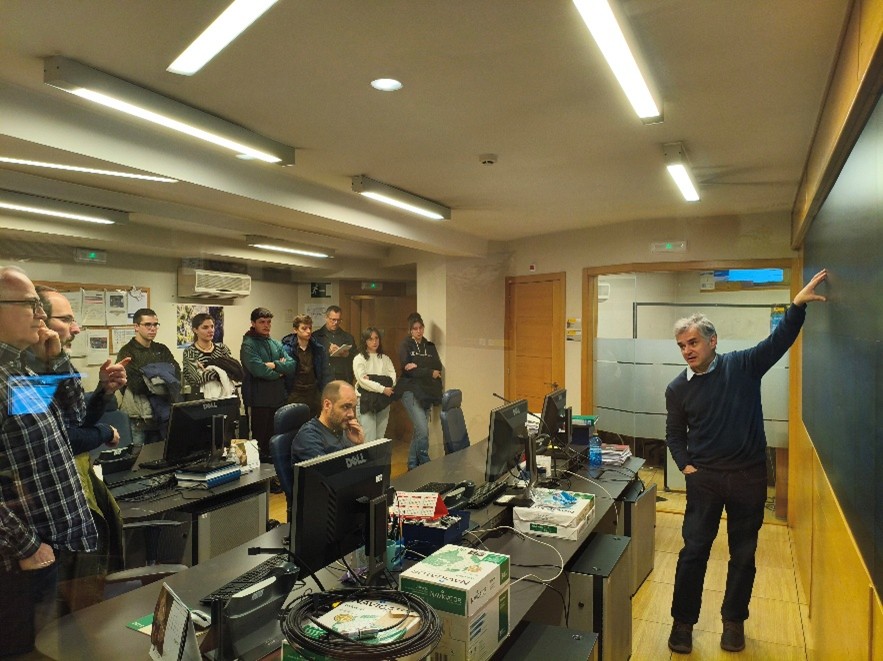
They observed the daily work carried out at the CECU on site.
They learned about the operation of the hydrological prediction tools and models used in the SAIH, which consists of 160 control points distributed throughout the territory of the demarcation and which send data in real time on hydrometeorological variables, as well as physical and chemical variables controlled by the SAICA.
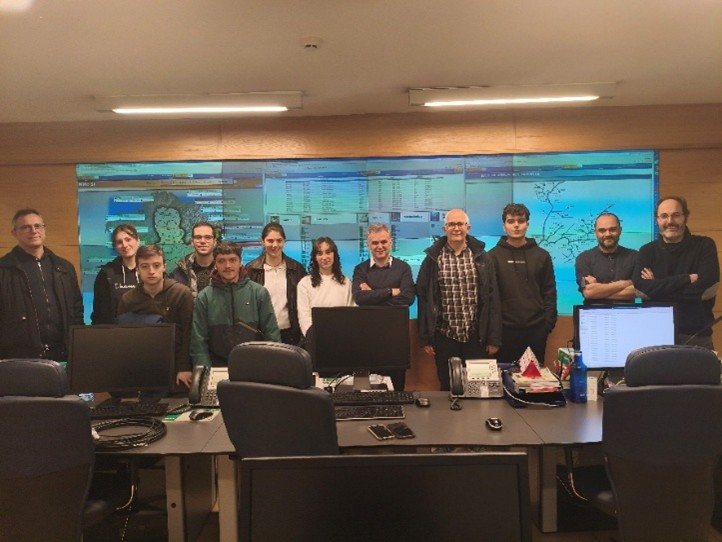
The Miño Hydrographic Confederation -Sil (CHMS), an autonomous body under the Ministry for Ecological Transition and Demographic Challenge (MITECO), welcomed students from the Higher Polytechnic School of Engineering at the USC’s Lugo Campus to its Basin Control Centre (CECU) to see first-hand how the daily work is carried out at these facilities.
CECU officials gave a detailed presentation on the reception, processing and transmission of data from the various control points (SAIH and SAICA) located throughout the extensive hydrographic network of the demarcation, rivers, reservoirs and aquifers, where hydrometeorological variables are recorded every five minutes in order to improve monitoring and follow-up in the event of any unforeseen circumstances and to improve plans and systems for dealing with droughts, floods or any other circumstances that may arise.
Similarly, they were able to observe the operation of the different hydrological prediction tools and models used in the SAIH, which consists of 160 control points distributed throughout the territory of the demarcation and which send real-time data on hydrometeorological variables, as well as the physical and chemical variables of water quality controlled by the Automatic Water Quality System (SAICA).
They also received an explanation of the agreements with other districts and countries, as well as the projects being carried out by the CHMS to increase and improve the control points (telenivometers, piezometers, etc.) located throughout the basin, through the Poctep Risc_Plus project.
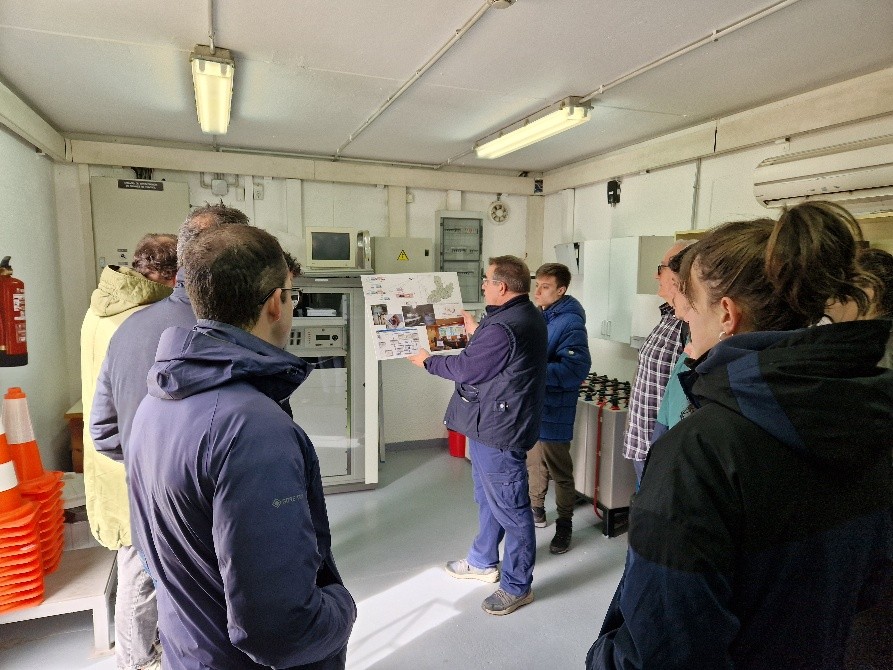
At the end of the visit to the Control Centre, they moved on to the Automatic Hydrological and Water Quality Information System station located on the Miño River, as it passes through the city of Ourense. There, they saw how data is collected by the various sensors at the facility and how it is sent to the CECU via satellite for proper monitoring and processing in the event of possible flooding or spills.
Students, teachers and CECU officials also had the opportunity to share anecdotes and interesting facts about the area and exchange experiences. Both parties were very satisfied with the technical and academic aspects of the visit, as well as with the welcome they received from CHMS staff and the interest shown by the students.