

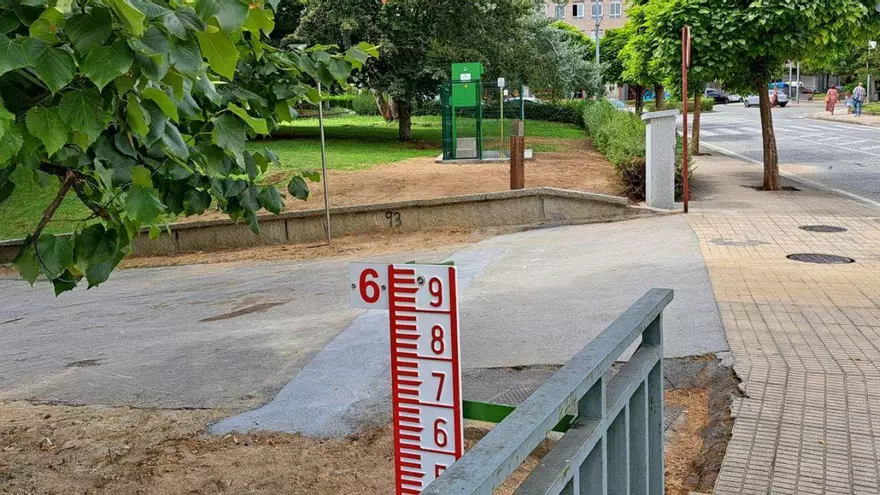
The city of Ourense now has a new tool to monitor the condition of its rivers and anticipate possible water-related emergencies. The Miño-Sil Hydrographic Confederation—CHMS—, the public body responsible for managing the rivers in this basin, has installed a new measurement station on the Barbaña River, which runs through much of the urban area.
This new monitoring point is part of the so-called Automatic Hydrological Information System—SAIH. It is a network of stations distributed throughout the territory that collect real-time data on river flow, rainfall, and water levels. This data is sent directly to the Basin Control Center, where it is received every five minutes and analyzed to make quick and well-informed decisions.
Having accurate, instant information enables faster response to dangerous situations, such as flooding from heavy rainfall or drought periods. It also helps better manage water use, an increasingly scarce and valuable resource, especially in the context of climate change.
The station installed on the Barbaña will also contribute to a more complete picture of what is happening in Ourense’s river network, joining other measurement points that already exist in the province and throughout the rest of the Miño-Sil basin.
The total cost of the installation has been 48,381 euros. Of that amount, more than 36,000 euros—specifically 36,285.75 euros—have been financed with European funds, thanks to the POCTEP RISC_PLUS project, a cooperation program between Spain and Portugal that aims to improve the response to natural hazards, such as floods, through technological innovation and joint work between neighboring territories.
This project is part of the Interreg VI A Spain–Portugal Program (POCTEP) 2021-2027, co-financed by the European Regional Development Fund (ERDF), which supports initiatives that promote sustainability and cross-border collaboration.


