

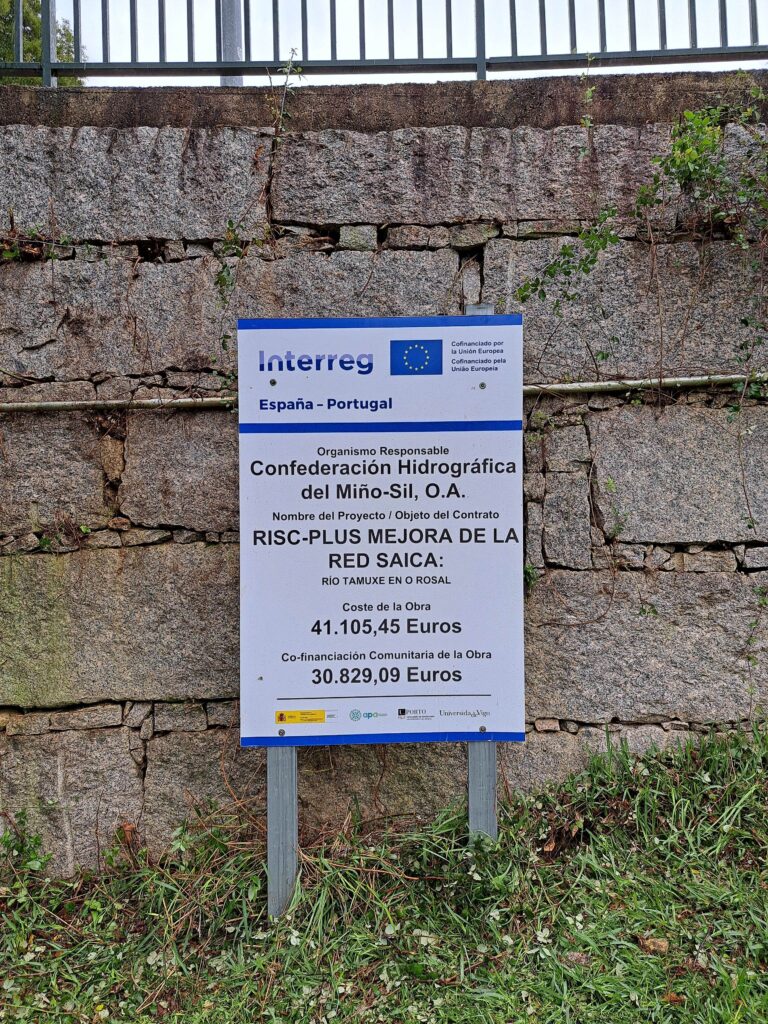
- Installation co-financed through the European Project POCTEP RISC_PLUS
- The Miño-Sil river basin has 116 stations providing hydrological information (SAIH), and 19 of them are equipped with specific technology to also provide water quality data (SAICA)
The Miño-Sil Hydrographic Confederation (CHMS) has completed the installation of a new Automatic Water Quality System (SAICA) station on the Tamuxe River, in the Pontevedra municipality of O Rosal.
The work consisted of installing a multiparametric probe that will provide real-time data on physicochemical variables that are crucial for water quality, such as turbidity, dissolved oxygen, conductivity, ammonium concentration, pH, and water temperature.
This system allows the detection of accidental pollution episodes that may occur in this water body and enables quicker and more effective action; furthermore, it will improve diagnosis and continuous monitoring of the state of the Tamuxe River water body.
The transmission of data from the new station to its reception at the basin control center (CECU) of the CHMS, located in the city of Ourense, will be carried out via satellite, with a value for each variable being received every fifteen minutes. Currently, the necessary tests and connections are being carried out to ensure the correct functioning of data transmission for its publication on the CHMS website in the coming weeks.
This new station is part of the SAICA network expansion project within the framework of the RISC_PLUS Project, whose objective is to design joint measures aimed at prevention, preparation, protection, forecasting, and better management of extreme phenomena such as floods, droughts, and accidental pollution events, as well as to assess and combat the effects of climate change in the international basin areas of the Miño, Sil, and Limia rivers.
The described actions represent an investment of €41,105 co-financed through the European Project POCTEP RISC_PLUS.


