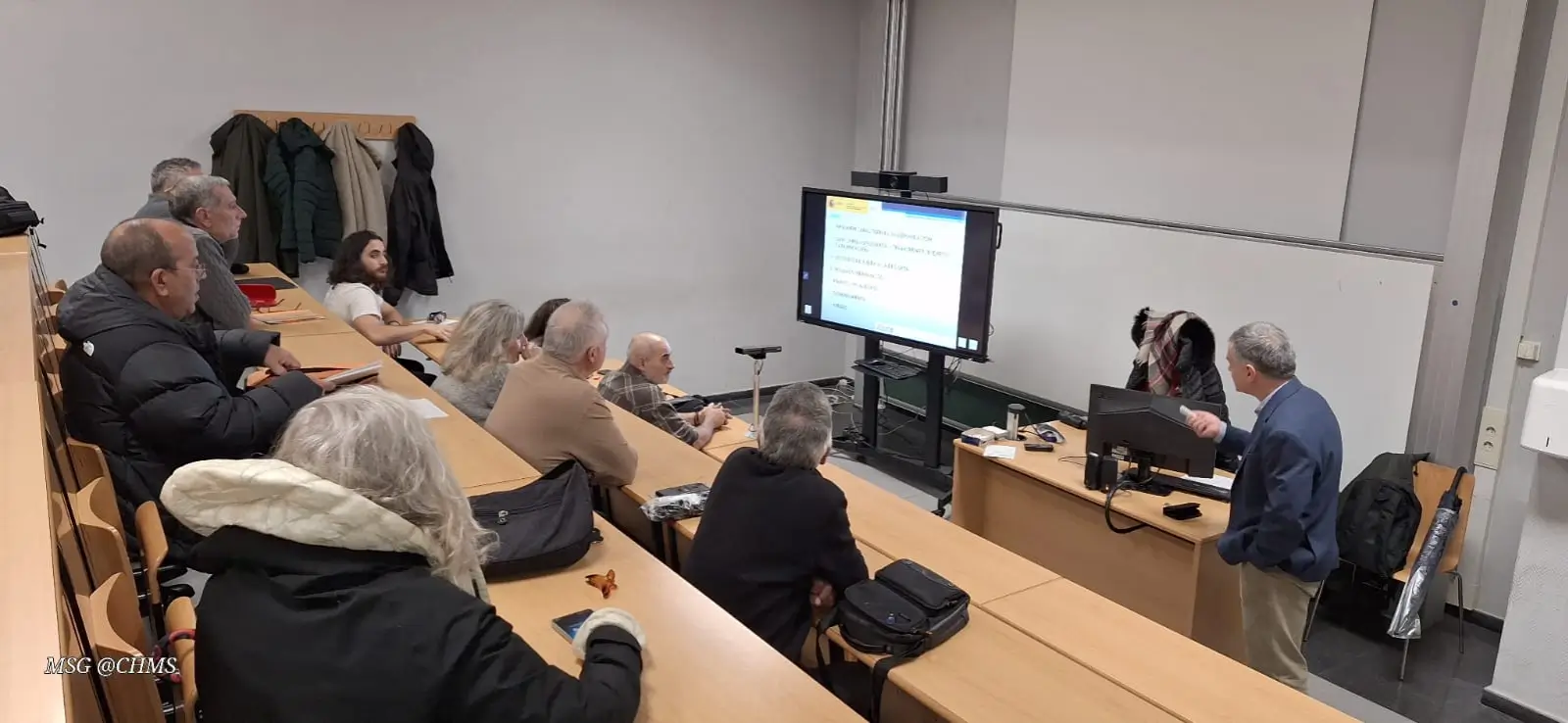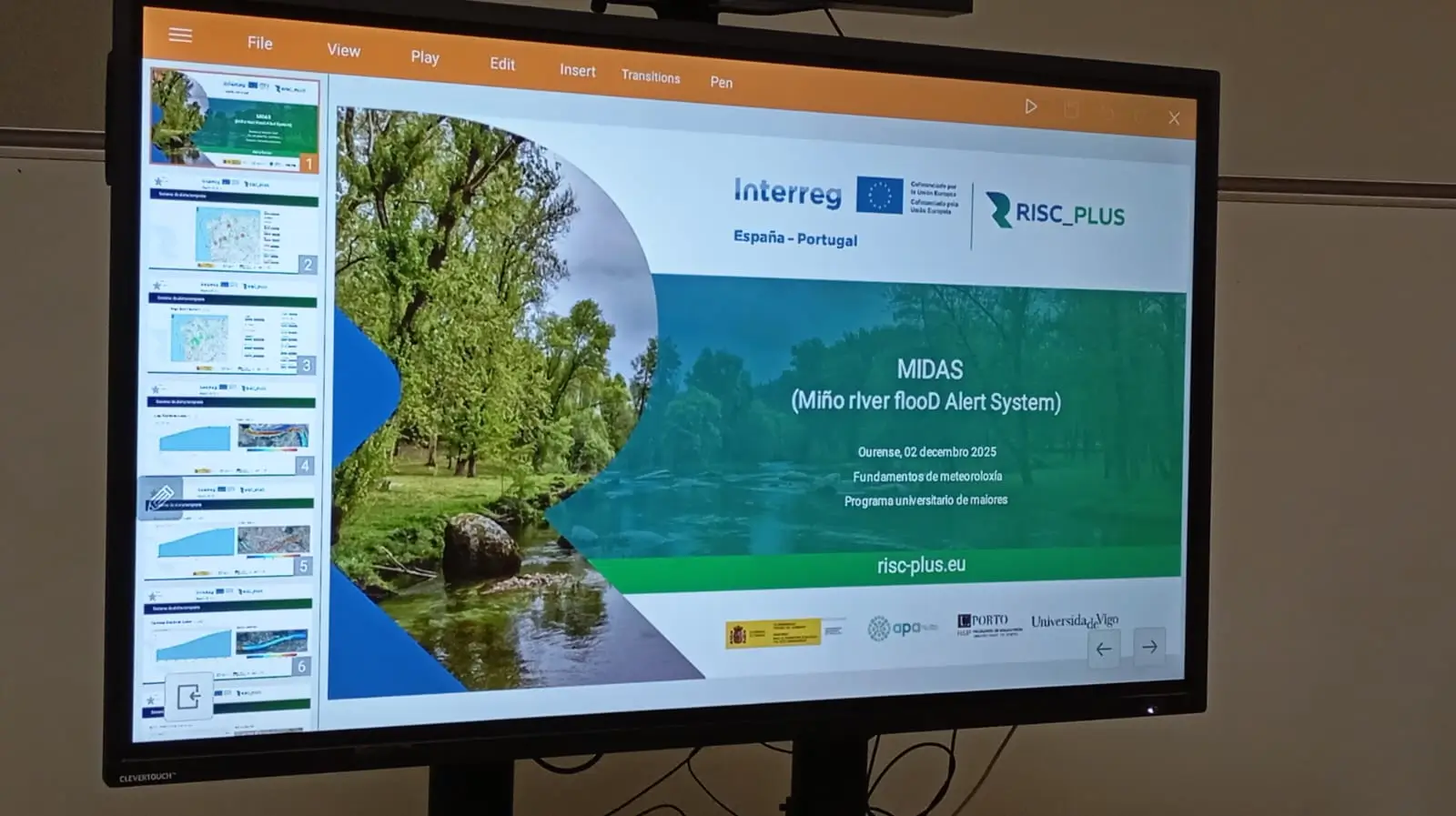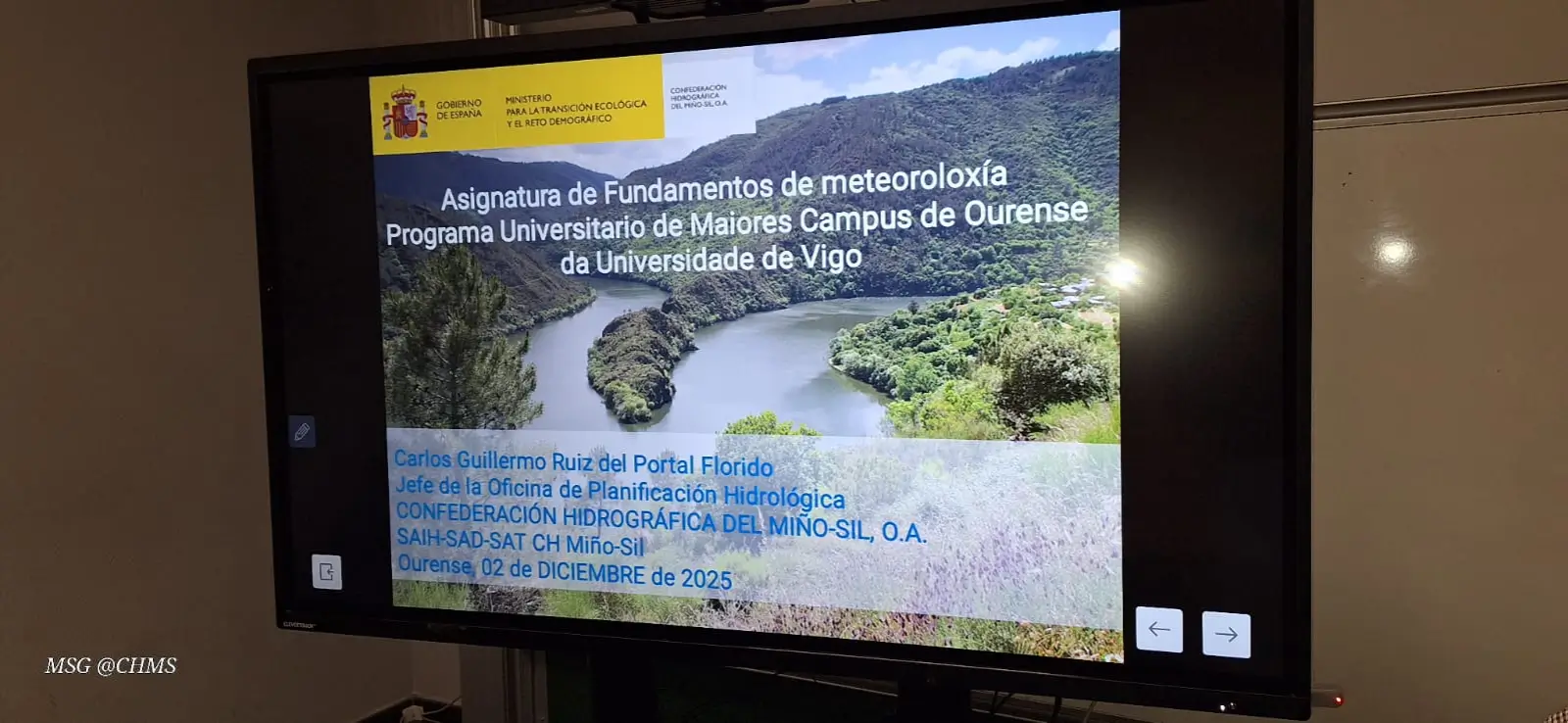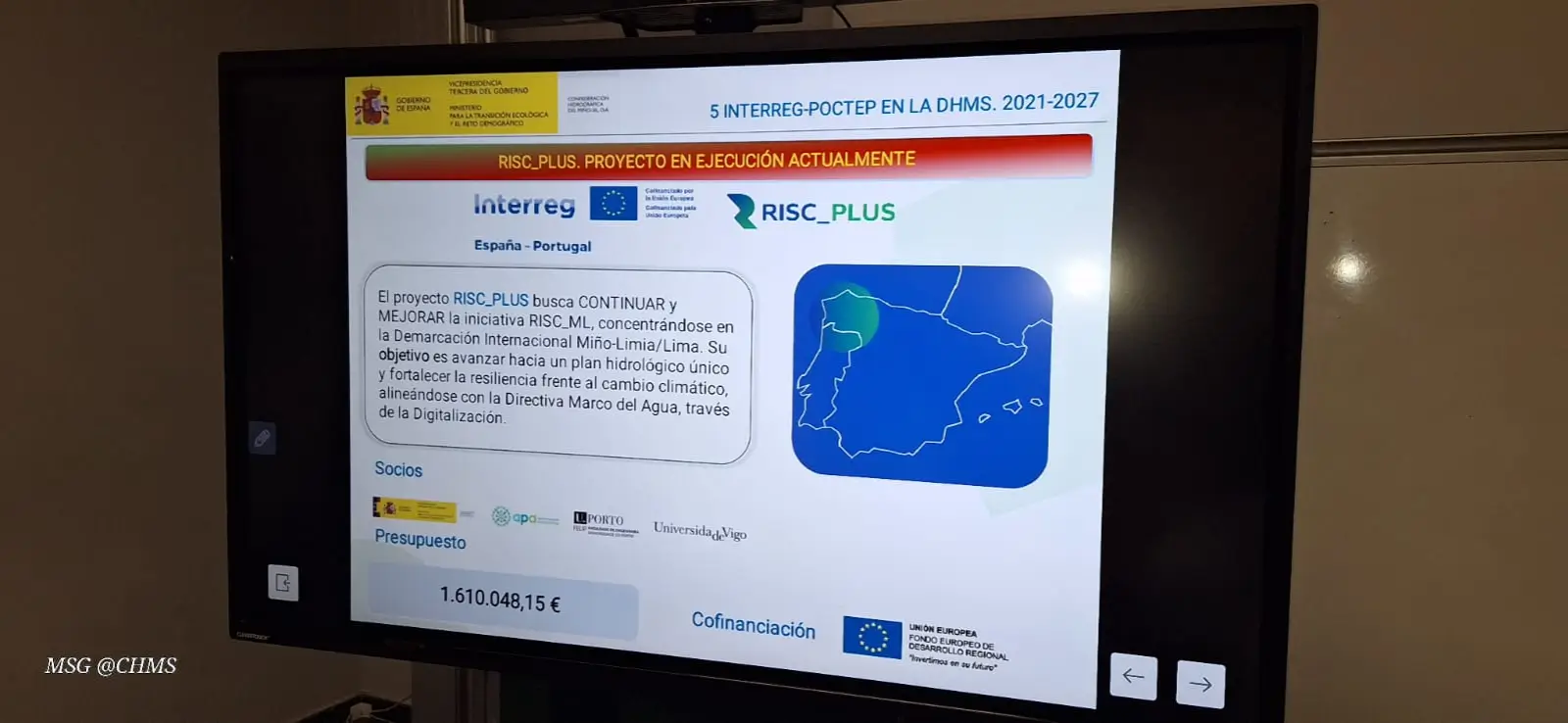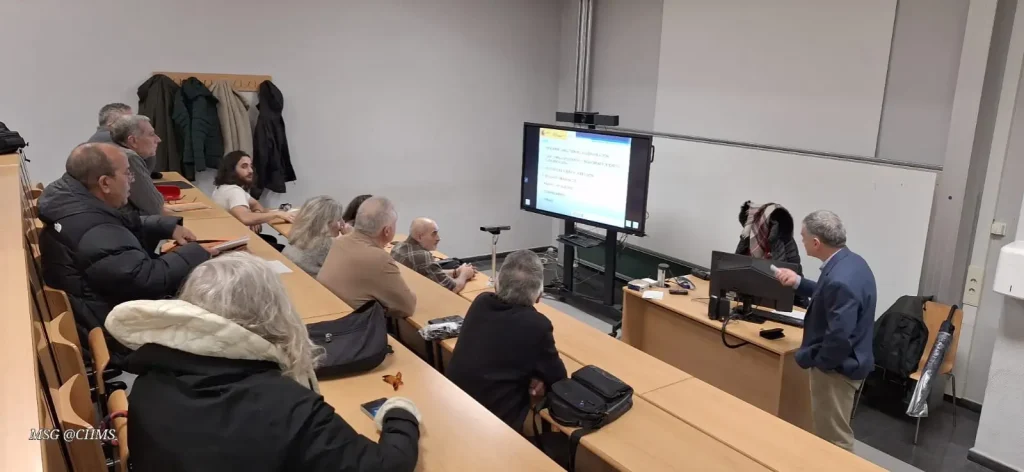
- During the day, the Basin Control Center (CECU), the SAIH-SAICA network, and the MIDAS system were presented as advanced monitoring tools
- This activity is part of the European RISC_PLUS project, which promotes prevention and response to adverse hydrological events
The Miño-Sil Hydrographic Confederation (CHMS) and the University of Vigo (UVigo) organized a joint technical session in which they presented the hydrological monitoring and control systems that both institutions develop for flood prevention and sustainable water management in the district.
Carlos Guillermo Ruiz, Head of the Hydrological Planning Office of CHMS, explained the operation of the Basin Control Center (CECU) and the stations of the Automatic Hydrological Information System (SAIH), highlighting their fundamental role in protecting the population and the benefits they provide against flood episodes. He also emphasized the economic and technical benefits that European projects bring to the modernization of these strategic infrastructures.
CECU constitutes the epicenter of the CHMS monitoring system. Operating continuously 365 days a year, this center receives via satellite, in real time and every five minutes, data from 117 stations (100 SAIH and 17 SAICA) distributed throughout the 17,600 km² of the district. These stations record hydrometeorological variables such as precipitation, river level and flow, reservoir status, and ambient temperature, among others.
Thanks to this information, continuously updated and publicly accessible through the organization’s website, CECU produces daily forecasts of precipitation and flows that allow anticipation of possible flood episodes. Alerts are immediately sent to Government Delegations and Subdelegations, civil protection services, regional emergency services (112), and municipalities, facilitating the activation of emergency plans with sufficient advance notice.
For her part, Helena Barreiro, professor at the University of Vigo, presented the MIDAS system, a complementary tool developed from the academic field that strengthens the capacity for analysis and management of hydrological information in the district.
This session is part of the European RISC_PLUS project, co-financed by the Interreg Spain-Portugal program (POCTEP) 2021-2027, which aims to improve prevention and response to extreme hydrological events through cross-border cooperation and technological innovation.
The collaboration between CHMS and the University of Vigo, within the framework of this project, strengthens the capacity for water analysis and management in the district, focusing on solutions based on scientific knowledge and infrastructure modernization to ensure efficient and sustainable management in a scenario marked by climate change.