- New Control Stations and innovative hydrological prediction tools will improve management in the face of extreme phenomena
- Project with a budget of more than €1,610,000
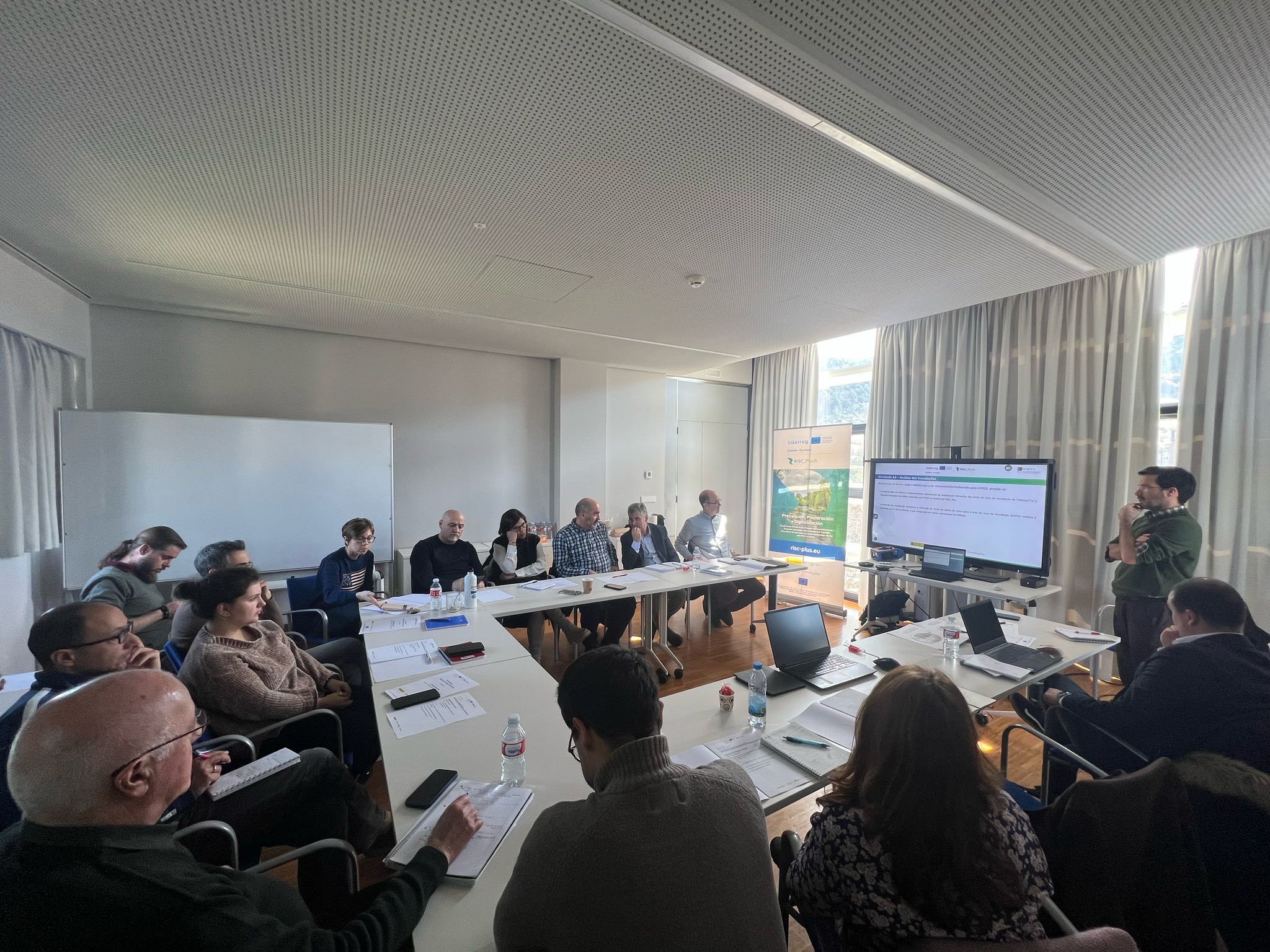
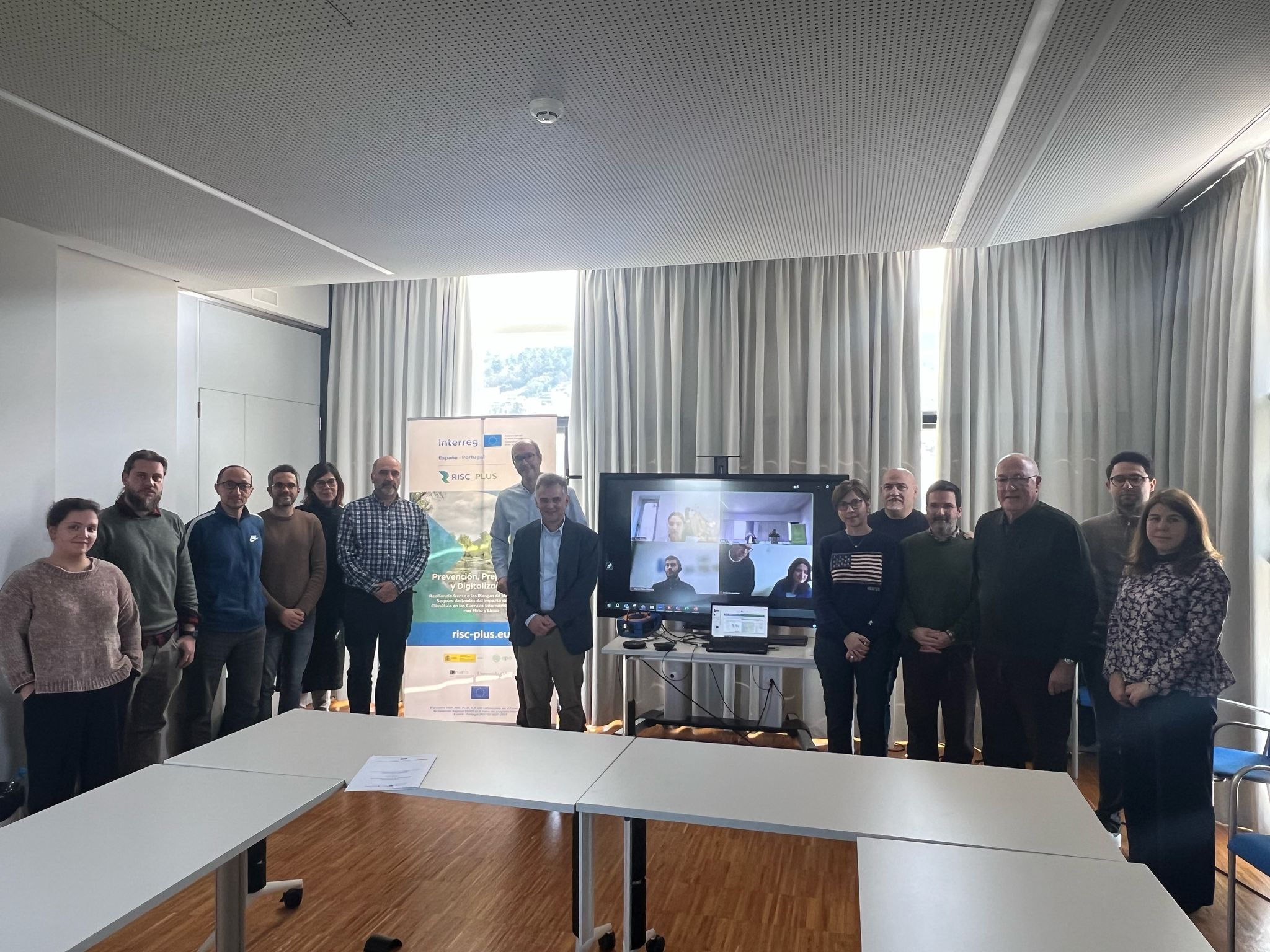
The Joint Working Group (JWG) of the European project POCTEP RISC_PLUS, co-financed by the European Regional Development Fund (ERDF) through the Interreg VI A Spain-Portugal (POCTEP) 2021-2027 programme, has held its 16th meeting, consolidating progress in hydro-meteorological monitoring and in the tools for managing the risks associated with extreme phenomena and climate change in the Miño-Sil river basin district.
During the meeting, the project partners analysed the progress in the installation of hydrological control stations, the integration of new hydro-meteorological prediction tools and cross-border cooperation between Spain and Portugal.
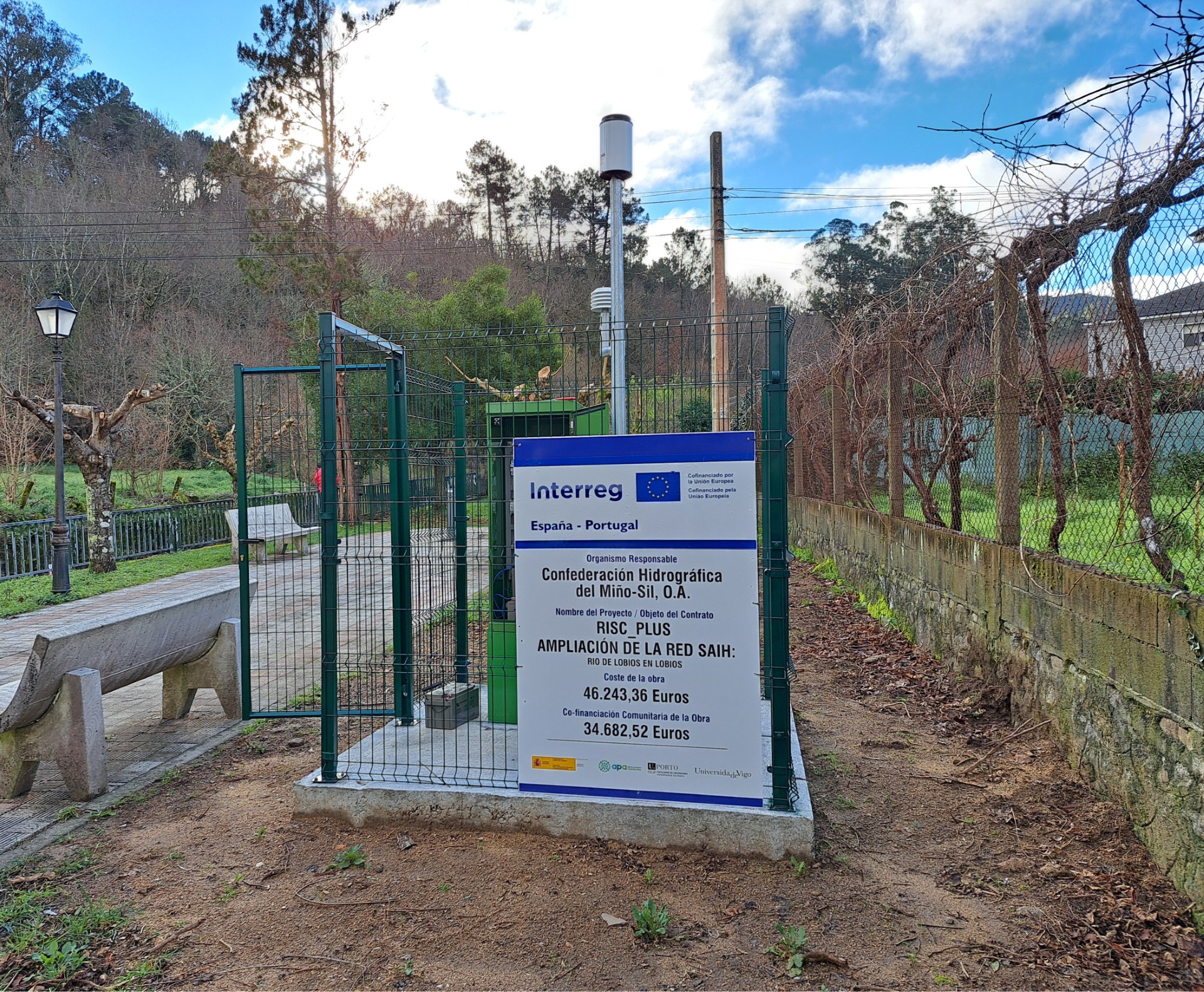
The Miño-Sil Hydrographic Confederation (CHMS) reported on the implementation and commissioning of five control stations (SAIH-SAICA) at strategic locations in Galicia and Castile and León, designed to improve water resource management, real-time hydrological monitoring and the prediction of extreme events: the Tamuxe river (O Rosal, Pontevedra), the Sil river (Toreno, León), the Quiroga river (Quiroga- Lugo), the Narla river (Friol, Lugo) and the Lobios river (Lobios- Ourense). These stations are in addition to the 118 that already exist in the Miño-Sil region.
The University of Vigo (UVigo) has presented improvements in the hydro-meteorological and hydraulic forecasting system, using an advanced platform for forecasting flow rates based on meteorological models, highlighting:
- Soil Moisture Accounting infiltration model, which optimises hydrological simulation.
- Expansion of the system: it now has 30 prediction points and is expected to be expanded.
- Use of AI for reservoir management, based on neural networks.
- Extension of the prediction to 72 hours, reinforcing the capacity to respond to extreme phenomena.
- Improvements in hydraulic modelling at the different points of the Automatic Hydrological Information System.
In addition, the Faculty of Engineering of the University of Porto (FEUP) has developed new systems and status indices with predictive components for scenarios of prolonged drought and cyclical shortages up to seven months in advance, based on models with a resolution of 0.25 degrees. In addition, the FEUP team has applied AI through machine learning to improve modelling in flood situations in the Lima basin, with comprehensive studies in Arcos de Valdevez and Ponte da Barca.