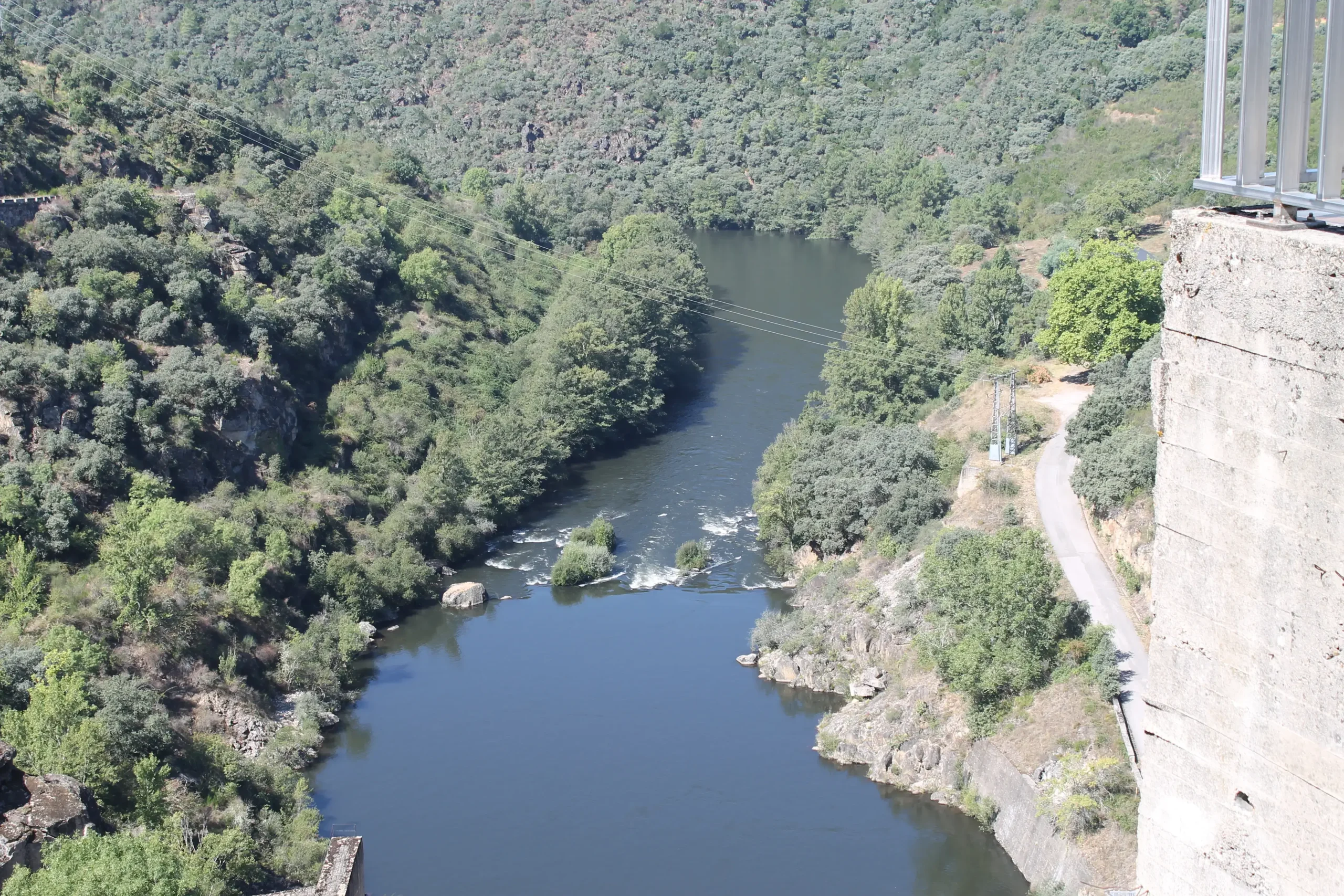
- Water reserves close the 2024-2025 hydrological year at 67.16% of capacity, 12.45% above the historical average.
- The European project RISC_PLUS strengthens the resilience of cross-border basins against climate change through science, innovation and cooperation between Spain and Portugal.
Ourense, October 15, 2025.– The Miño-Sil River Basin Authority (CHMS), main partner of the European project RISC_PLUS, presented the balance of the 2024-2025 hydrological year. The close of the period reflects that the reservoirs of the Miño and Lima basins stand at 67.16% of their capacity, which represents 12.45% above the historical average and constitutes the highest value since records began (1999/00 – 2023/24) for this time of year.
Although average annual precipitation was 1,036.4 l/m², 9.5% below the historical average, stored water reserves reached maximum levels thanks to a lower rate of decline recorded since June, probably related to lower hydroelectric use demand.
Regarding flow rates in the rivers of the basin, they remain close to the historical average, just 1.6% below the mean. Piezometric levels of groundwater also show values similar to the average, closing 2.5% below.
Climate context and resilience
Projects such as RISC_PLUS gain special relevance in contexts like the current one, with precipitation deficits in months that used to be wet; in this regard, work is being done to achieve greater resilience of the international Miño and Lima basins against extreme phenomena such as droughts and floods.
This project, co-financed by the European Interreg Spain–Portugal programme (POCTEP) 2021–2027, focuses on solutions based on scientific knowledge, cross-border cooperation and technological innovation, to ensure efficient and sustainable water management in a scenario marked by climate change.
Precipitation distribution
During this hydrological year, the months of January and April can be classified as very wet; October as wet; March and May as normal; November, February and September as dry; and December, June, July and August as very dry. Dry months clearly predominate throughout the year, with the summer period standing out, from June to September, which saw four consecutive dry months, three in the “very dry” category (June to August) and one “dry” (September).
This distribution meant that flood events were of low intensity and without significant material damage, with three main episodes standing out: October 19-21, January 26-31, and April 19-21.